
Writing is Hell...Unless you apply for residencies
How a writing residency can change your life

The year is 2015. I am in the doldrums, rudderless and wondering what my life will become, sitting at the kitchen table with my dear Nigerwife friend Mona in Lagos, Nigeria. We are catching up, talking kids, parents and the cost of imported salmon, when out of nowhere she tells me to apply for the Millay Colony residency and even gives me the form, and then badgers me to apply. What a great friend!
With her encouragement, I applied, never expecting to be accepted (I’ll tell you the secret to getting accepted at the end) and the following year, I found myself in the middle of a forest in the Hudson Valley writing alongside such luminaries as David Adjmi (who later went onto write the Tony smash hit Broadway play, Stereophonics), Lily J. Morris and Frauke Shlitz, heralded visual artists, among others.
Here is a poorly-lit photo of some of us hanging out.
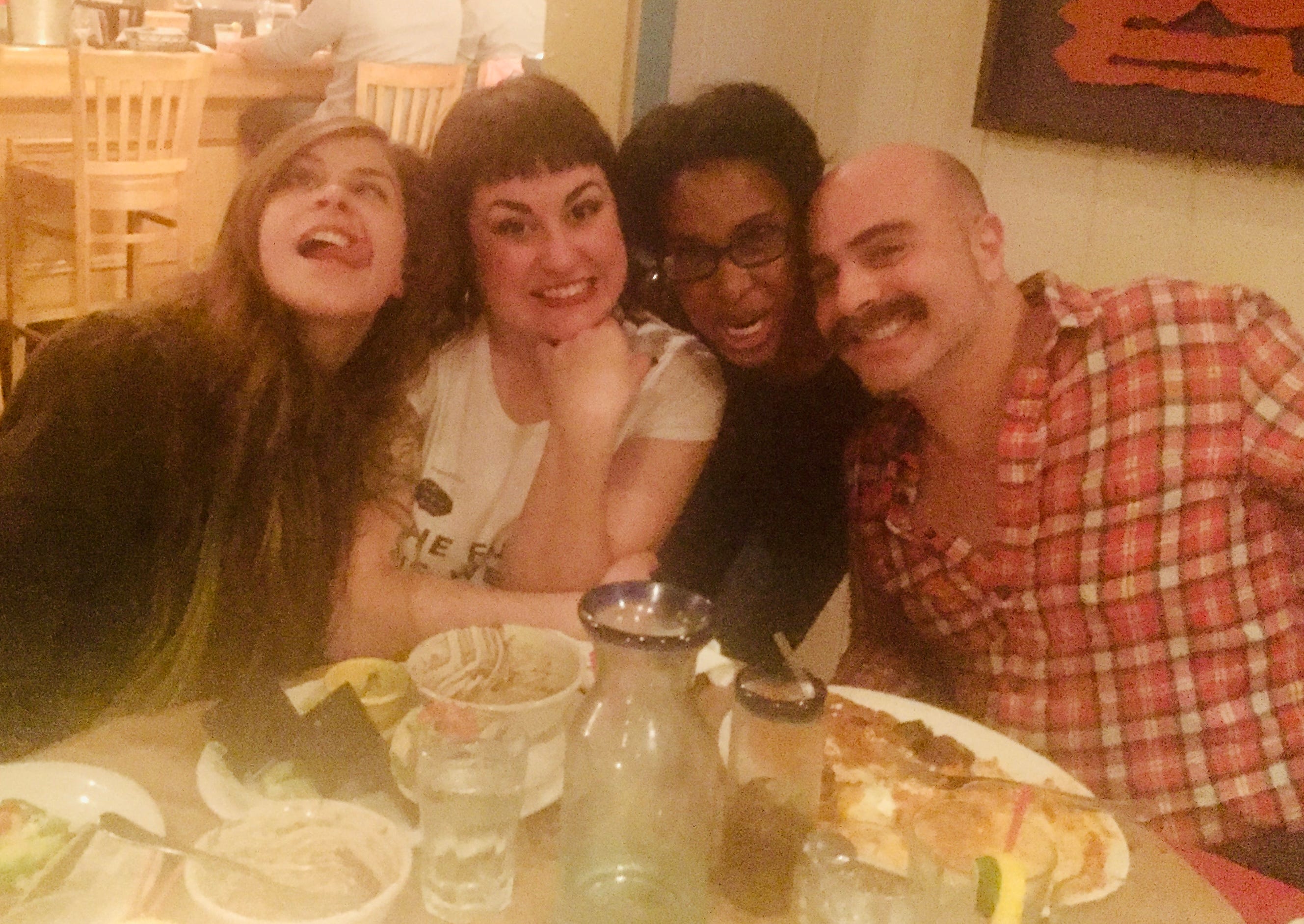
I had done a couple of residencies before in the UK, but nothing like this, and after so many years not writing at all, this residency was a game-changer for me. For starters, I had a whole room just for writing, which seemed incredibly indulgent. I pondered and wrote and read all day, every day for two weeks. And then everyone else on the residency was so encouraging, literally lighting a fire under my ass to get going. I think Lily said something like… ‘Get the hell out of that place and move to America!’. Was it a coincidence that I moved to America three years later? Nope. And three years after that, I finished The Lagos Wife, got an agent, and a book deal. The wheels of change move slowly, my friend.
That residency changed my trajectory. I was still in a bad place, a distressed Lagos housewife, but it was the start of getting me out of the rut. In 2021, now living in New York, I applied for a Tin House parent residency. That got me two weeks in Oregon, and that final push is how I finished The Lagos Wife. Also, the connections I made at Tin House made a huge difference. One of their editors at the time, Elizabeth DeMeo read my full manuscript, and her encouraging feedback pushed me to query, while her reference definitely helped me get agents’ attention.
It’s easy to say, this is the best novel you have ever read, but it’s more effective when ‘Elizabeth DeMeo from Tin House said this is the best novel she’s ever read’. (I can’t remember her actual praise. It wasn’t quite that, but Tin House also later offered for my novel).
Even an online conference at Martha’s Vineyard Writers Conference, while not transformative, gave me lovely writer friends I still have today. Writer friends are important. I think I have a Substack on that.
I haven’t done a residency since, partly because with my promotional commitments and my kids, I haven’t had as much time to get away, and partly because I have been rejected from residencies, and partly because my imposter syndrome is back. Imposter syndrome is something you may deal with frequently as a writer. It sort of goes with the territory.
The reasons you might get rejected vary. Some residencies have thousands who apply each year, some are looking for a certain style of writing or writer. Some want stories that cover particular issues - identity, war, belonging, sexuality, lesser-told stories, etc. So consider that when choosing what sample to submit where. Most tend to skew away from anything that reads ‘commercial’ whatever that means. Don’t get discouraged by rejections. Don’t let rejections make you feel like your writing isn’t great. Some people seem to spend more time applying for things than actually writing. The actually writing part is the most important.
All residencies are not the same either. Some are just time away from the world to write. Others incorporate community, and still others go further in giving you classes that teach you craft. A residency isn’t the be-all and end-all. i managed to finish a whole second novel without a residency. But I think it is worth applying to a few every year because having to prepare a sample of writing for submission focuses the mind, and also, you never know!
To sum up, here are five reasons why you should do a residency as a writer. Apply!
For encouragement and affirmation
To have time to write. Often paid time. Most are fully funded
To make useful connections
The prestige for your writing resume
To finish your work. It’s not just ‘time’, it’s also purpose.
Here are five residencies to consider applying for in the US
Millay Colony
Tin House
Yaddo
Omi
Macdowell
Yes, to all of this! I try to remind myself that rejections are not a reflection of my writing ability but instead a sign that a specific residency was not a good fit for me. I am a firm believer in “what is meant for you will be for you! “